16/10/2024 12:00AM | By John Benson
Air Conditioning Condenser Unit All Gassed Up for the Summer - Is your Thermatic® Electric Fan up to it?
Continue Reading...
11/09/2024 12:00AM | By John Benson
Davies Craig Electric Water Pump ~ size and performance.
It’s said that size doesn’t matter. Vehicle engines are supplied in a va...
Continue Reading...
23/05/2024 12:00AM | By John Benson
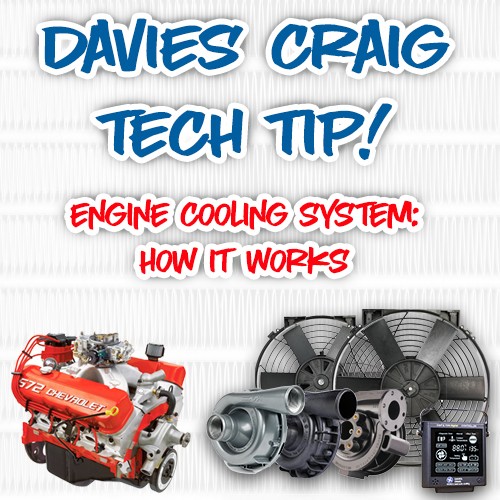
One significant advance in fuel economy, emissions reduction and power train performance lies within one single area of the vehicle: the engine’s cooling system.
Continue Reading...
20/11/2023 12:00AM | By Paul Jenkins
One issue I had early on was cooling, there are two headers in a very small engine bay, and the maximum frontal area of the radiator is limited to around 11 inches, which quite honestly is too small for a mildly tuned V8.
Continue Reading...
14/11/2023 12:00AM | By John Benson
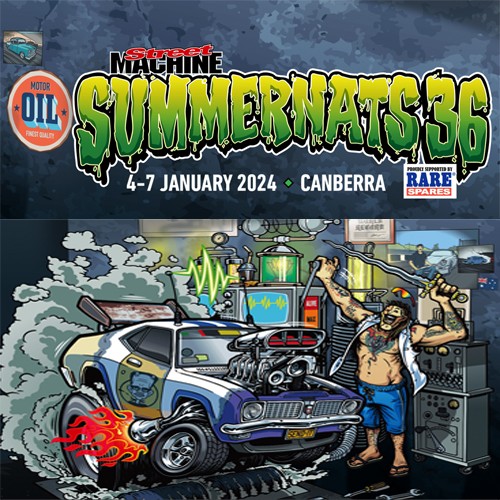
For more than 20 years Davies Craig Pty Ltd has travelled up to Canberra for the National Capital’s automotive extravaganza the first week of January each year! Tens of thousands of car-loving fans and thousands of entrants will either take part or enjoy the automotive carnival of varying festivities which encapsulates the entire city for four full-on days!
Continue Reading...
31/08/2023 12:00AM | By Davies Craig Pty ltd
A tyre with low pressure and increased temperature leads to reduced fuel efficiency, decreased handling, and an increased risk of accidents
Continue Reading...
30/05/2023 12:00AM | By International Racing - Ride Fast Motorcycle Magazine (Sth Africa)
South Africa’s Team Matjien and engineer/pilot, 67 year old Koos Zietsman plans to break the world land speed record on a South African made 498cc 2-stroke machine at Bonneville next year.
Continue Reading...
After years promoting the virtues of motorsports, public relations guru Mike Drewer has been racing for himself across the salt bed of Lake Ga...
Continue Reading...
11/10/2022 12:00AM | By Daryl Davies
Australian specialist pump designer & manufacturer, Davies, Craig has introduced its newest range of marine, DC powered, electric water pumps.
Continue Reading...
04/10/2022 12:00AM | By Bob Beers
I installed a Davies, Craig Electric Water Pumps on our 1929 Model A Ford Speedster, and we are very happy with the performance. I wrote an article that have have shared with fellow vintage automobile performance folks. I have enclosed that information below. Thanks for a great product. Bob Whe
Continue Reading...
30/08/2022 12:00AM | By John Benson
BUILDING ICONIC 1950’s DREAM MACHINES!
Continue Reading...
01/08/2022 12:00AM
The main function of an engine’s cooling system is to ensure the engine operates at its optimum operating temperature. An automotive engine oper...
Continue Reading...
When it comes to controlling Twin Electric Fans there are several options available.
You could just wire the electric fans to run all the ti...
Continue Reading...
08/06/2021 12:00AM
Who would have thought, that back in the ‘60’s two young Aussies Daryl Davies and Bill Craig would carve out a niche in Australian automotive aftermarket history with their innovative work developing Australian automotive and air conditioning electric fans?
Continue Reading...
29/04/2021 12:00AM
So how do I find out which Davies Craig Electric Thermatic® Fan suits my car?
Continue Reading...
25/11/2020 12:00AM
Turbochargers generate an enormous amount of heat. Heat-soak is a huge factor with turbochargers, can ‘kill’ them fast and must be brought under control after engine shut-down. Heat originates in the exhaust system and during solid use, high exhaust temperatures unload enormous quantities of heat into the exhaust manifolds, turbine housing, and turbine wheel.
Continue Reading...
02/09/2020 12:00AM
The decision to build a 6-wheeler using a reversed VW Kombi torsion housing as the lazy axle and make a tray bed big enough to carry a beetle was relatively simple.
Continue Reading...
27/04/2020 12:00AM
If you are planning on eliminating you current mechanical water pump you have choice of which model EWP® you wish to install in your engine’s bottom radiator hose.
Continue Reading...
30/03/2020 12:00AM
What Are The Benefits Of An Davies, Craig Electric Water Pump (EWP)
Continue Reading...
10/02/2020 12:00AM
Australian automotive cooling technologies manufacturer Davies Craig Pty Ltd now has four compact Electric Booster Pumps (EBP®) in its range, the EBP®15; EBP®23; EBP®25 and EBP®40, available in 12v and 24v models.
Continue Reading...
06/02/2020 12:00AM
One of the best reasons to upgrade your car’s cooling system with a remote-mounted EWP® or Electric Water Pump is having the original mechanical pump fail. Given the original design hasn’t really changed for decades, and the design itself was simple to begin with, what can go wrong?
Continue Reading...
30/01/2020 12:00AM
Engines aren’t the only things we can keep cool and Davies Craig is proud to announce a new transmission cooler kit for the Ford Ranger, Mazda BT 50, and related vehicles that are fitted with a Ford 6R80 transmission.
Continue Reading...
24/01/2020 12:00AM
Car engines come in many sizes and have done size the first rolled off the construction line. One can head into a car showroom and be greeted with engines smaller than a bottle of soft drink, the size of a family aimed milk bottle, or bigger.
Continue Reading...
17/01/2020 12:00AM
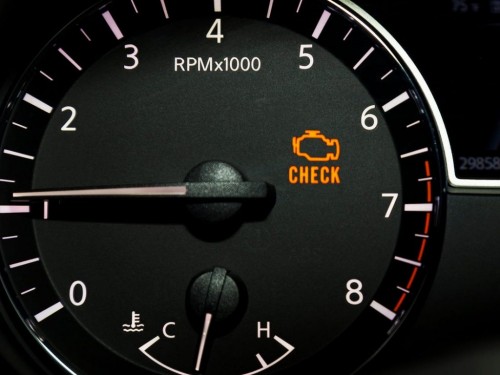
Chevrolet’s small block V8 engines are known for their strength and durability. But like anything mechanical, Small Block Chev overheating issues can occur and it can sometimes be a matter of following a path from a to z to identify the cause of SBC overheating problems. The most easily recognised indicator? Keep an eye on the car’s temperature gauge.
Continue Reading...